

Globle: Daily Spatial Geography Game
Last week we reviewed Worldle (yes, that's how it's spelled), a game with a not-so-subtle nod to Wordle with a distinct geographical twist. This time, we are exploring Globle (yes, that's how this one is spelled). It's another fun daily geography guessing game, but more distant from the Wordle format.
Review
Similar to Wordle, this is a daily puzzle game. If you are good with geography, most days might take 4-8 guesses, perhaps fewer if you can estimate distances well on a globe. The gameplay is a little different from Wordle and Worldle, but here are the basics:
- The object is to guess the "Mystery Country" of the day in as few guesses as possible, using the hints provided with each guess.
- Again, like Worldle and Wordle, there is one puzzle per day. No need to worry about losing 2 hours in one sitting to an addictive game.
- You start by naming a single country, watching it highlighted in color based on proximity to the "Mystery Country" of the day. If you look below the globe, you will also find the distance between that the "Mystery Country" and the geographically nearest country guess in kilometers.
- Highlighted colors will be on a warm color scale based on proximity to the "Mystery Country." Countries guessed in close proximity will appear in deeper red colors while those more distant will appear less warm in colors like orange to yellow or pale yellow.
- With each guess, your guessed countries will be ranked based on geographical proximity to the "Mystery Country."
- When you guess the correct country, it will be highlighted in green.
Overall, this one might be more challenging than Worldle from last week. We hope you find a little joy—or perhaps another daily obsession—in this geography game.

Controlling for other variables, study abroad students complete their degrees with higher GPAs
New data from the CASSIE (The Consortium for Analysis of Student Success through International Education) project explores the impacts of study abroad on student academic success. The CASSIE project report, released in spring 2022, studies metrics for student success for more than 30,000 students across 36 U.S. universities of various profiles. Controlling for numerous academic and demographic factors to tease apart correlation from causality, the project aims to identify how study abroad impacts student success.
Last week, we highlighted improved academic success was the rate at which students graduate in 4 years and also at 6 years. Another measure of enhanced academic success was improved student GPA at the time of graduation. Based on UC Merced's enrollment profile, the predicted bump in GPAs is projected to be 0.10-0.11 (e.g. instead of a 3.68 GPA at graduation, the study abroad grad achieves a 3.78-3.79 GPA). This holds true across a number of student groups, but the impact is magnified for students who might fall into the following categories:
- Need-based financial aid recipients
- Underrepresented minority groups*
- First-generation college students
- STEM and non-STEM students alike, but greater gains for non-STEM students
Achieveing a higher GPA has several positive impacts:
- It can help you earn academic honors,
- It can get you into a more highly ranked or competitive graduate or professional school,
- It can make the difference in landing certain internships or jobs if you have less professional experience, and
- It can make you eligible for certain scholarships and fellowships.
But the CASSIE project measured student success using other metrics. We'll continue to look at what other CASSIE findings suggest.
* Underrepresented minority groups, as defined by the CASSIE project includes the following:
- American Indian/Alaskan Native,
- Black or African American,
- Hispanic, and
- Native Hawaiian/Pacific Islander
Earth Day 2022 theme: Invest in Our Planet
April 22 is Earth Day—Invest in Our Planet … and Yourself!
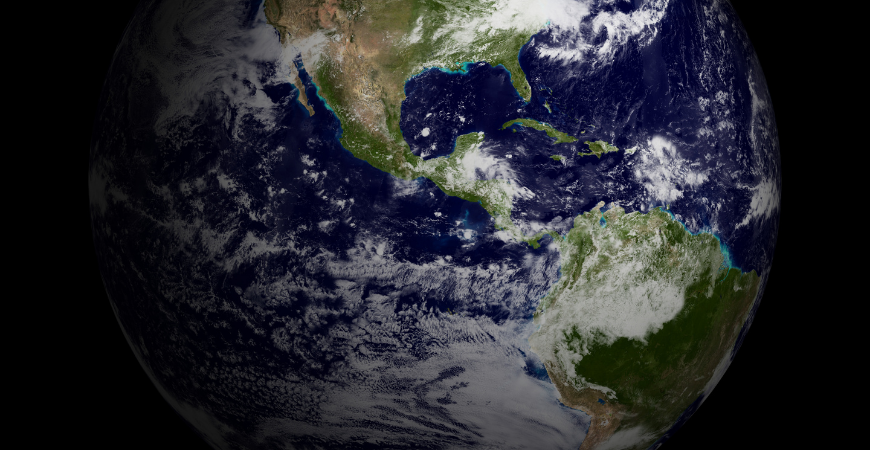 For Earth Day 2022, we are encouraged to invest in our planet. And this is a genuinely worthy effort. However, it's easier to help save the planet if you get to know it first, to see it from more than one perspective, to step back and see your own footprint from a new point of view.
When you think of studying abroad for the first time, think of yourself as an astronaut heading up to the International Space Station. You would have to be pretty accomplished and knowledgeable to be selected to go up there, but astronaut after astronaut the perspective on the earth is transformed by the new view. Study abroad, while not space travel, affords you the opportunity to put down roots for perhaps 4 months and see the world through a new lens.
Sometimes, to solve the biggest problems we face, we can use the problem-solving, the resolve, the perspective of others who have encountered similar challenges, and studying abroad does just that. With new perspective, you can channel your newfound perspective and enthusiasm to improve your career and community.
So, invest in our planet and invest in yourself!
Here are some resources to get started:
- Tips for a Regenerative—Not Just Sustainable—Study Abroad Experience (UC Education Abroad Program)
- How to Help Stop Global Climate Change (UC Education Abroad Program)
- UCEAP study abroad opportunities that focus on conservation, restoration, or sustainability (scroll down)
- For fun: The 30 Best National Parks in the World (OutsideOnline.com)
UCEAP opportunities that focus on conservation, restoration, or sustainability
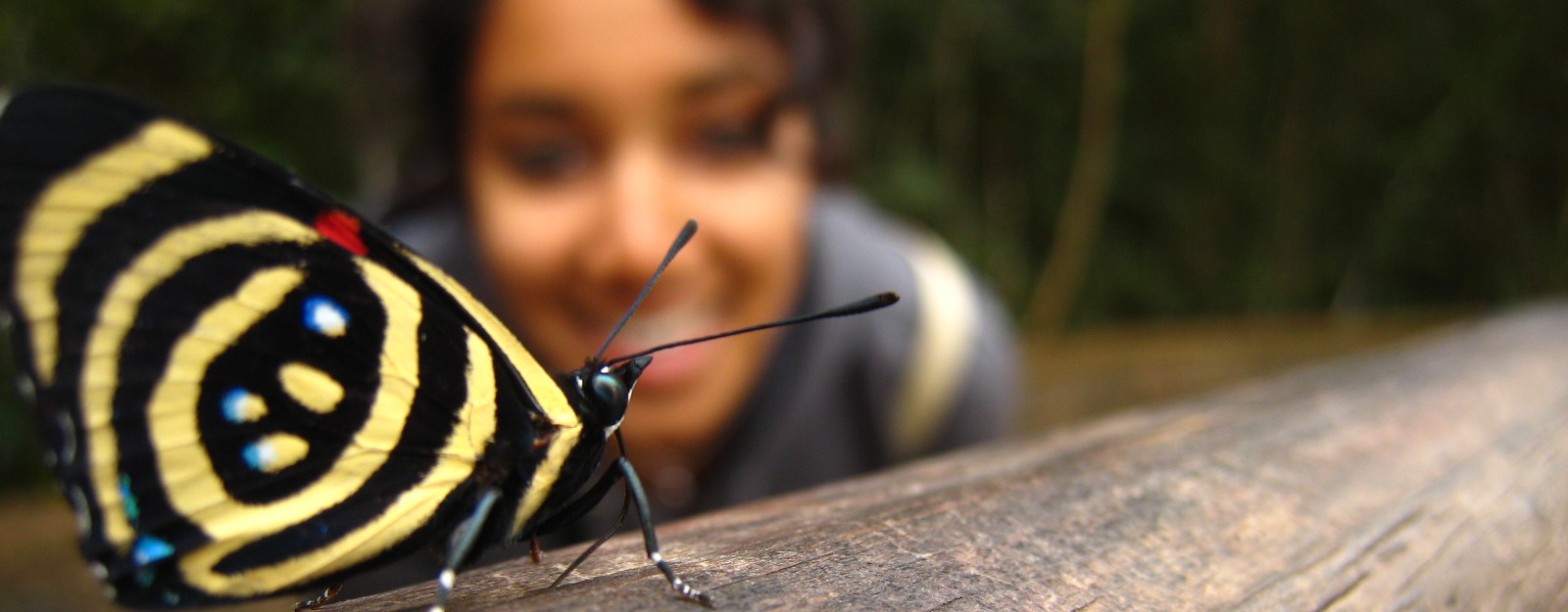 |
| Butterfly on a log in Costa Rica |
- Marine Biology & Terrestrial Ecology, Australia
A model of diversity, Australia is home to more species of plants, mammals, birds, and amphibians than any other country. If you’re passionate about oceanography, ecology, and conservation, this fieldwork program is a perfect fit. - Socio-Ecological Sustainability in Southern Chile
Investigate sustainable development and conservation. In the land of the indigenous Mapuche people, there is awe-inspiring beauty everywhere—and it demands preservation. As you build a sustainability plan, through the lens of the Mapuche, consider the local agriculture, logging industry, and tourism. Travel to national parks and stay in a natural retreat area to work on your project. - Community-Based Health, Food Security and Development, Ghana
Head to Ghana’s rural villages for an unforgettable experience in community development. Combining academics and fieldwork, you’ll build marketable skills in your field. University of Ghana faculty and medical experts teach seminars that prepare you for community service outside the capital of Accra. - Made in Italy
In beautiful Florence, a global capital of culture and innovation, you can learn about the entrepreneurial spirit that fuels family businesses in Italy, explore how Italian style in food, fashion and art has evolved and is marketed, or study the environment and sustainability in Tuscany through internships and coursework. - International Economics, Thailand
Geek out on the economy, trade, and investments. You’ll also see how fair economic competition, sustainable development, and equitable economics continue to integrate the Association of Southeast Asian Nations into the global economy. - Tropical Biology and Conservation, Costa Rica
Research ecology, biology, and natural history in the cloud forests, oceans, and mountains of Costa Rica. Monteverde, based high in the protected cloud forest, is a rural community of bicultural and bilingual people. As a conservation and ecotourism destination, it attracts biologists from all over the world. - Univ. of British Columbia, Canada
The surroundings, including the close proximity to the Pacific Ocean, and its commitment to creating an exceptional learning environment make UBC a prime destination for scientific research. Nature-lovers and inquisitive minds have the freedom to research everything from subatomic physics to plant research to sustainability. - Lund Univ, Sweden
Being a hub of technology, innovation, and entrepreneurship, Lund is a fantastic choice for a wide-range of academic pursuits. As the birthplace of innovations like the artificial kidney, Bluetooth, and the eco-friendly Tetra Pak carton, Lund University is an exciting place to study and take courses like Social Innovation or Sustainability Management. - Univ. of Botswana
Challenge your perspectives on Africa as you explore public health, ecotourism, development, and wildlife preservation in Gaborone. Botswana's diverse landscapes, biodiversity, and focus on sustainable growth will present both a scientific and social perspective on issues impacting the global community. Complement your studies with a weeklong rural safari in Chobe National Park. - Biodiversity, Singapore
Take your love for nature to the clean, green, and biologically rich island of Singapore. Venture into tropical ecosystems and conduct field studies in swamps, rainforests, and coral reefs. Dynamic field classes include rigorous hikes, swimming, and exploration of remote areas.
