
Study abroad in anthropology offers many unique opportunities to add new perspective to those areas most important to anthropologists, whether it is migration patterns from the Middle East and Africa across the West, or archaeological digs in the Middle, or socio-cultural challenges across Latin America. With three upper-division general anthropology electives and electives in socio-cultural anthropology and anthropological archaeology, there is plenty of flexibility in the major.
Programs Specifically for Anthropology
Programs Specifically for Anthropology |
|---|
UBCText |
HUText |
UC RomeText |
BilkentText |
1.
Univ. of British Columbia
Known for the strength of its anthropology program and its research and connections to the First Nations in the Northwest, UBC is a strong choice. UCEAP at UBC offers your choice of regular university courses at the Vancouver campus with opportunities for study in a wide range of most academic disciplines.
2.
Hebrew Univ. of Jerusalem
Jerusalem, city of storied landmarks and spiritual centers, is also a hub of rapid development and leading industries. In this exciting city, you can study archaelogy or contemporary Israeli or Middle East issues in courses taught in English.
3.
UC Center Rome (Multiple Options)
Consider courses like “Italy: Territory, Food, and Anthropology,” “Ancient Roman Civilization: The City and Culture of Rome,” or “Ancient Romans at Work and Play: Reconstructing the Past” in these specialized programs in the heart of both the former Roman Empire and modern Italy. Summer, fall, and spring offer unique options.
Learn more about deadlines, details, and the application:
4.
Bilkent Univ. (Currently Suspended)
Consider this program in the political heart of modern Turkey but also close to archaeological dig sites for a country on the trade crossroads from East to West for millennia. Take courses taught in English exploring a wide variety of fields in Turkey's capital city of Ankara. Options include archeology (and digs during a second semester), art history, political science, engineering, and many other disciplines.
These are only programs that target coursework in Anthropology. Immersion, exchange, field studies, and international school programs should also have a selection of offerings to suit Anthropology majors.
Immersion & Exchange Programs Suggested for Anthropology
1.
Univ. of Copenhagen
Copenhagen ranks as the #1 choice of UC Merced anthropology students over the years. It is also arguably UCEAP's best partner university for anthropology in all of mainland Europe with courses taught in English across a wide variety of fields.
2.
Scottish Universities: Univ. of Edinburgh
While the Univ. of Edinburgh is the most highly ranked for anthropology, Scotland’s wealth of history, culture, scenic beauty, and academic excellence are yours as you choose among three world-renowned universities in the historic cities of Edinburgh, Glasgow, or St. Andrews.
3.
Arts, Politics, Society & Space, UC Center London
A rigorous curriculum highlighting London as a global crossroads of major social and cultural forces. The city’s unique resources and exciting activities outside the classroom enrich your experience.
4.
Australian Universities: Australian National Univ., Univ. of Melbourne, Univ. of Sydney
With a special emphasis on aboriginal studies, Austalian universities should catch the anthropologist's eye, particularly the highly ranked Australian National Univ. Attend world-class host universities in the alluring “Land Down Under.” From laneway cafés in the major cities to the Outback and Great Barrier Reef, Australia has something for just about everyone.
5.
Summer, University of Sussex
Intensive learning in a friendly, cosmopolitan environment just an hour from London. Get ahead of your degree requirement and enjoy an array of course offerings, from film and anthropology to physics.
6.
National Univ. of Singapore (NUS)
Take anthropology courses at arguably the highest ranked university in Asia through UCEAP. Take classes in most UC majors taught by faculty from around the world, and engage with this top level university community through research, clubs, sports, and cultural activities.
7.
Univ. of Oslo Univ. of Oslo
If you have an interest in the Vikings or modern Scandinavian culture, consider the highly ranked Univ. of Oslo for study abroad. Take courses taught in English in a wide range of fields at the highest ranked university in Norway. Enjoy beautiful Oslo, a small capital city surrounded by sea, forests and the Oslo Fjord.
8.
Lund Univ.
Another favorite for students studying the Vikings or modern Scandinavian culture, Lund Univ. is another highly ranked university for anthropology. Courses in English in a wide range of academic fields. Lively college town environment in a charming medieval city.
By no means is this list comprehensive, but you may also search additional program opportunities.
Completing Other SSHA Requirements Abroad
SSHA students, in general, can take advantage of the requirement to complete four (4) non-major upper-division general education courses—or equivalent—from SSHA areas as varied as English literature to economics. Most SSHA students complete one or more of these required courses while studying abroad. These courses must be reviewed through the SSHA course approval form (see below).
SSHA students must also complete a total of 60.0 semester units in order to graduate. SSHA students complete many of these units within their major but often need more and can complete these requirements abroad.
Course Approval and Course Approval Forms
With a few exceptions of previously approved courses (ask your academic advisor), courses will need to be approved to meet individual degree requirements. In these cases, students will use the Course Approval Form for the school that would typically offer such a course at UC Merced:
The school will usually require a syllabus or equivalent in order to do a review. Keep in mind that syllabi may be protected intellectual property of certain professors or universities and may not be publicly posted online. If it is a UC Center program, you may be able to acquire syllabi through your study abroad advisor. If the program is with a local host university and the course is not posted online, you may be able to inquire with the instructor or host university in some cases.
Academic Planning
No matter your academic intentions while studying abroad, you should consult your academic advisor in SSHA and your MyAudit report to plan out your study abroad academic goals. Once you narrow your search to 1-3 study abroad programs consult your program page or ask your study abroad advisor about resources for researching courses in your program.
Hourglass Half Full Icon
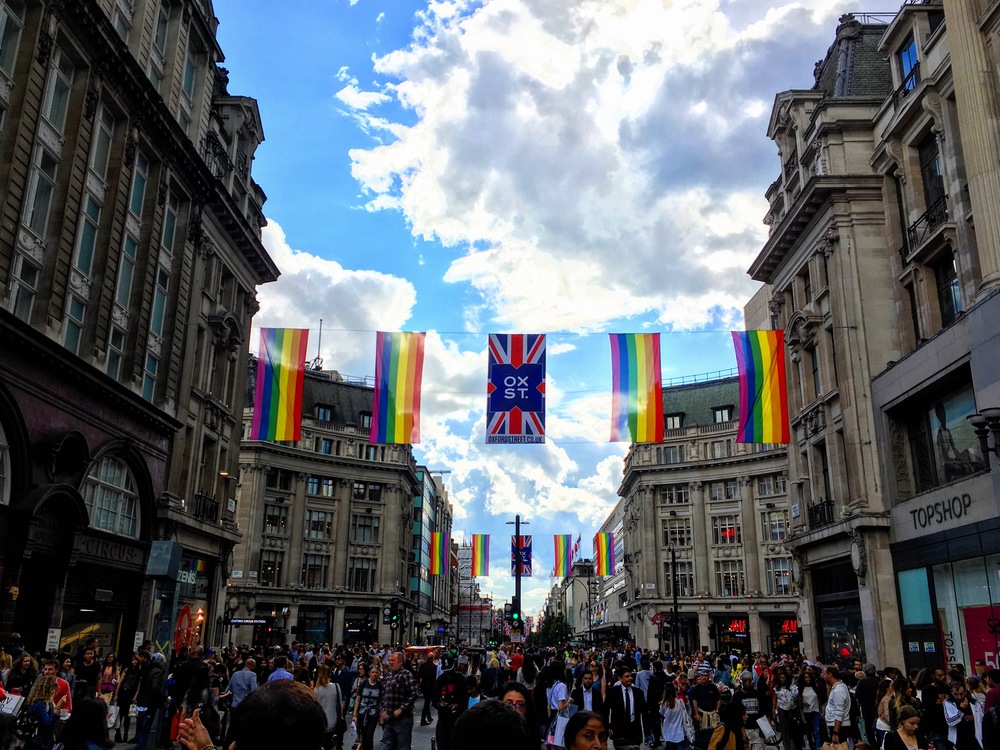
Studying abroad is an opportunity for all students to experience a new culture, gain new skills, and expand their worldviews. For the LGBTQ+ community, studying abroad can be an opportunity to learn more about themselves and their identity within the global context. The Office of International Affairs at UC Merced recognizes that the LGBTQ+ community faces a unique set of challenges and we are committed to providing our students with the best possible study abroad experience.
OIA LGBTQ+ Study Abroad Brochure
10 Reasons Why LGBTQ Students Should Study Abroad
Before You Apply to Study Abroad
Take the time to Learn about:
- Laws of the host country
- LGBTQ+ media in host country
- LGBTQ+ organizations and support resources in host country
- General attitudes towards LGBTQ+ individuals in host country
- Norms and behaviors of the host culture
- LGBTQ+ meeting places in host country/city
Use the following resources to research your country of interest:
- UCEAP LGBITQ Community
- LGBT Student Guide for Education Abroad
- International Lesbian, Gay, Bisexual, Trans and Intersex Association
- International Gay & Lesbian Travel Association
- Rainbow Sig
- Global Gayz
UC Merced Testimonials
UCEAP Countries & Tolerance Levels
UCEAP urges all participants to obey the laws of the host country, and respect and abide by local cultural norms. Before selecting a country, be well acquainted with host country laws and tolerance levels. Consider how a potential host country defines and views interpersonal relationships and what it views as appropriate behaviors.
| Minimal Risk | Low Risk | Moderate Risk | High Risk |
| Argentina | Australia | Brazil | Barbados |
| Canada | France | Chile | Botswana |
| Costa Rica | Israel | China | Egypt |
| Czech Republic | Italy | Dominican Republic | Ghana |
| Denmark | Japan | Korea, Republic of | Indonesia |
| Germany | Mexico | Singapore | Jordan |
| Ireland | Thailand | South Africa | Morocco |
| Netherlands | Taiwan | Senegal | |
| New Zealand | Turkey | Russia | |
| Spain | Vietnam | Tanzania | |
| Sweden | India |
*Tolerance levels reflect information as of February 2016.
For a more detailed explanation of UCEAP destinations, tolerance levels, and risk mitigation strategies consult the UCEAP Sexual and Gender Diversity Webpage.
Identity & Safety Abroad
Understanding the implications of expressing an LGBTQ+ identity abroad is important for all students to know. Although coming out may be an empowering experience, it can also be uncomfortable or even unsafe for students and those around them. Concepts of identity and the way in which LGBTQ+ individuals are perceived not only vary from country to country but even between regions within the same country. Researching your host country before going abroad will help mitigate risks. Though once abroad, it is recommended that students reevaluate the local LGBTQ+ tolerance levels before coming out. As part of the study abroad experience, students learn to adapt to their new environment by observing local manners and behaviors of their host culture. LGBTQ+ students should exercise the same caution.
Additional Resources
TIP: Once abroad, find people you can be open with and seek out local LGBTQ+ communities.
LGBTQ+ & Gender Studies Abroad
You can use the UCEAP Course Catalog to search for classes that focus on gender and sexuality (try searching UC Subject: Women and Gender Studies or Keyword: sex/sexuality, gender or queer). Past UC students have taken such courses in Argentina, Australia, Barbados, Denmark, France, Germany, Ghana, Hong Kong, Ireland, Japan, Mexico, Netherlands, New Zealand, Singapore, South Africa, Spain, Sweden, Thailand and the UK. However, please be aware that even though a program in a certain country may offer classes focusing on Gender or LGBTQ+ studies this does not necessarily reflect attitudes of the local community. Make sure you thoroughly research your program before making a choice.
International Opportunities Program (IOP) options:
Coming Soon!
Scholarships for LGBTQ+ Students
- Rainbow Scholarship
- Diversity Abroad Summer Scholarship
- The Point Foundation LGBTQ Scholarship
- Gamma Mu Foundation Scholarship
- Pride Foundation Scholarships
- Asia Pacific Islander Queer Women and Transgender Community Scholarship
- PFLAG National Scholarship
- Stonewall Foundation Scholarships
Travel Tips
Most LGBTQ+ travelers do not encounter problems while abroad but it helps being prepared and informed about your destination before you go. The following resources provide LGBTQ+ individuals with answers to frequently asked questions, tips on mitigating risk and other useful links.
Air Travel
The National Center for Transgender Equality (NCTE) identifies the specific obstacles transgender people might face during air travel and how to get around them. NCTE also offers tips on how to get through TSA with resources like the notification card, which is a standardized card offered by TSA wherein one can discretely disclose a health or medically related circumstance to an agent, as well as requesting assistance from a specialist during check in by calling the TSA hotline 72 hours before checking in. For more information visit Know Your Rights: Airport Security and Transgender People.
Passport
For passport information concerning name changes, gender marker changes, and two-year passports visit the National Center for Transgender Equality.
Students that need a passport and are in the process or have completed gender reassignment should consult the U.S. Department of State for application information. To apply for a passport, students should use the DS-11 form and should be prepared to provide supporting documentation that includes:
- ID that resembles your current appearance
- Passport photo that resembles your current appearance
- A physician certificate that validates whether your gender transition is either in process or complete (required if you would like your passport issued in your new gender)
- Proof of legal name change (if applicable)
Additional Resources
Contact Us
International Center
Kolligian Library 101
Monday - Thursday 9:00am - 4:00pm
Friday 9:00am - 2:00pm
Phone: (209) 228.4722
Email: international@ucmerced.edu
Angi Baxter
Women's Programs & LGBTQ+ Initiatives Coordinator
Office of Student Life
Phone: (209) 228.2250
Email: abaxter3@ucmerced.edu
Lambda Alliance
Email: lambdaalliance@ucmerced.edu
Find them on Facebook: Lambda Alliance at UC Merced
**Material adapted from University of California, Santa Cruz's Queers Abroad, UC Education Abroad Program, Department of State, National Center for Transgender Equality, Rainbow SIG, & ILGA **
