Q: Initially, what made you decide to study abroad? Why did you choose your programs?
A: My decision to study abroad came from a long-standing fascination with Italy's deep connection between food, culture, and history. As a Public Health major with a particular interest in nutrition, I wanted the opportunity to see firsthand how Italian food traditions shape community health and wellbeing, an interest grounded in coursework like Nutrition and Global Health that examined how culture, economics, and society shape health outcomes.
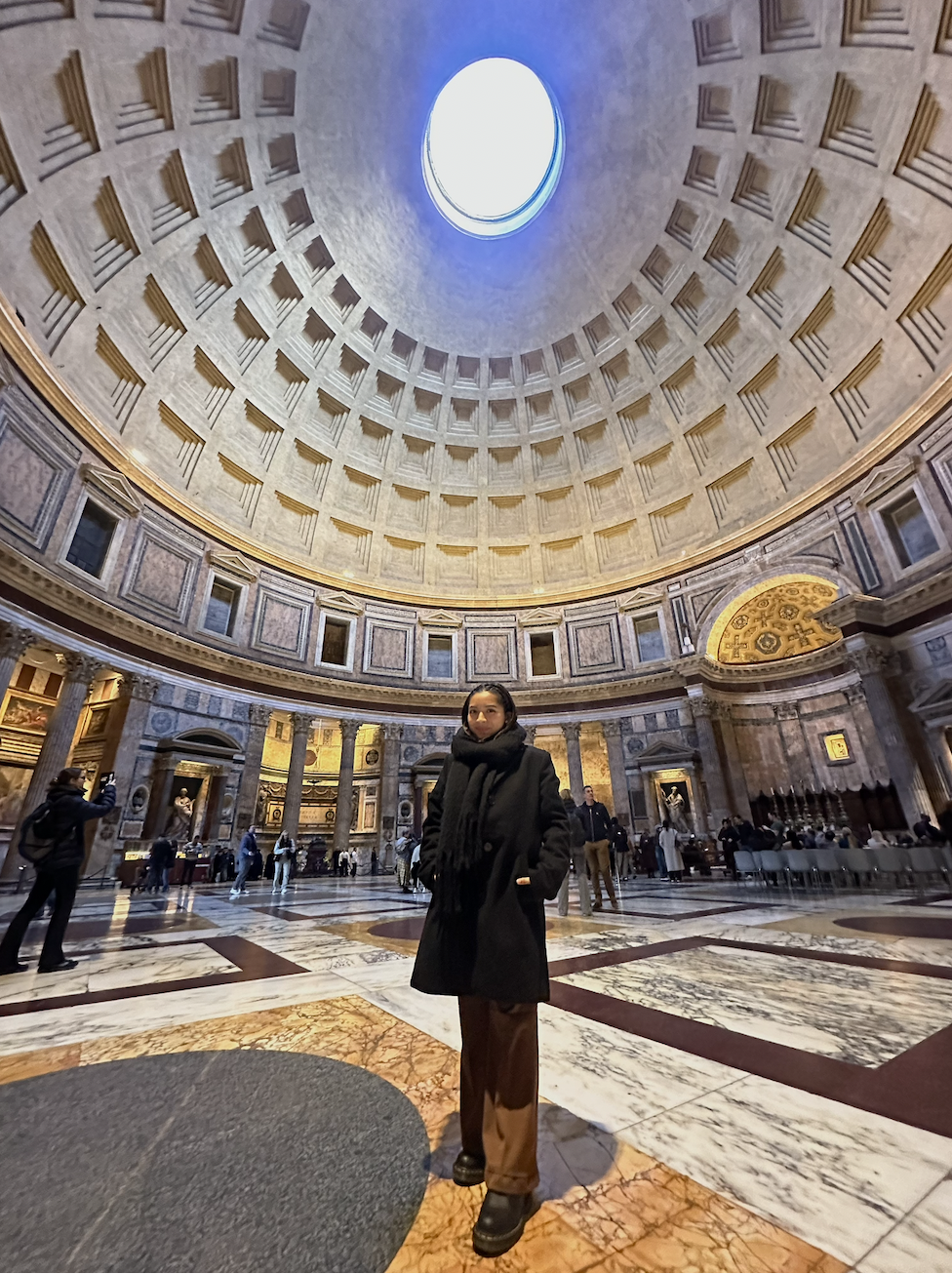
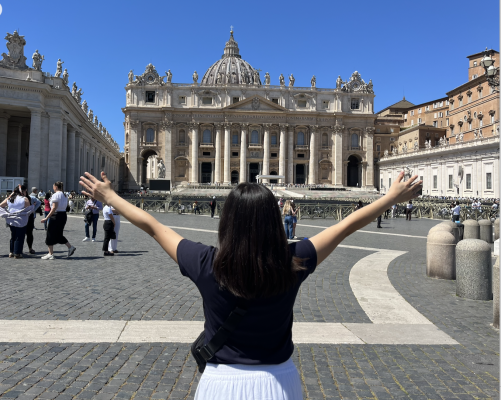
I chose the UCEAP Rome program specifically because it combined rigorous academic study with genuine cultural immersion, allowing me to observe nutrition and public health within their social and historical context rather than only through a classroom lens. I was also drawn to Rome's social and religious diversity, which connected to both my academic curiosity and my own faith, and I knew that attending weekly Mass near Vatican City would be a meaningful part of my time there.
Beyond academics, this decision carried deep personal significance. My family has never had the opportunity to travel internationally, and I wanted to be the first in my family to study abroad, turning what could have remained an inaccessible experience into something truly irreplaceable. I also saw this as a chance to challenge myself, step outside my comfort zone, build independence, and learn to adapt to an unfamiliar environment in a way that would carry over into both my personal growth and my future career in public health.
Q: What was the highlight of your study abroad experience?
A: The highlight of my experience was, fittingly, one of the simplest parts of my routine: riding the bus each morning with my classmates. Even on the most chaotic mornings, weaving through traffic and crowded streets, I would catch a view of Vatican City bathed in early sunlight, a quiet reminder of where I was and what an extraordinary opportunity I had been given. It was during one of my final rides that the weight of the semester truly settled in, the realization that something so ordinary had become so meaningful, and that it was coming to an end. That contrast between the everyday chaos and the quiet beauty of the city captured everything I loved about my time in Rome.
Q: What was your greatest challenge abroad and how did you overcome it?
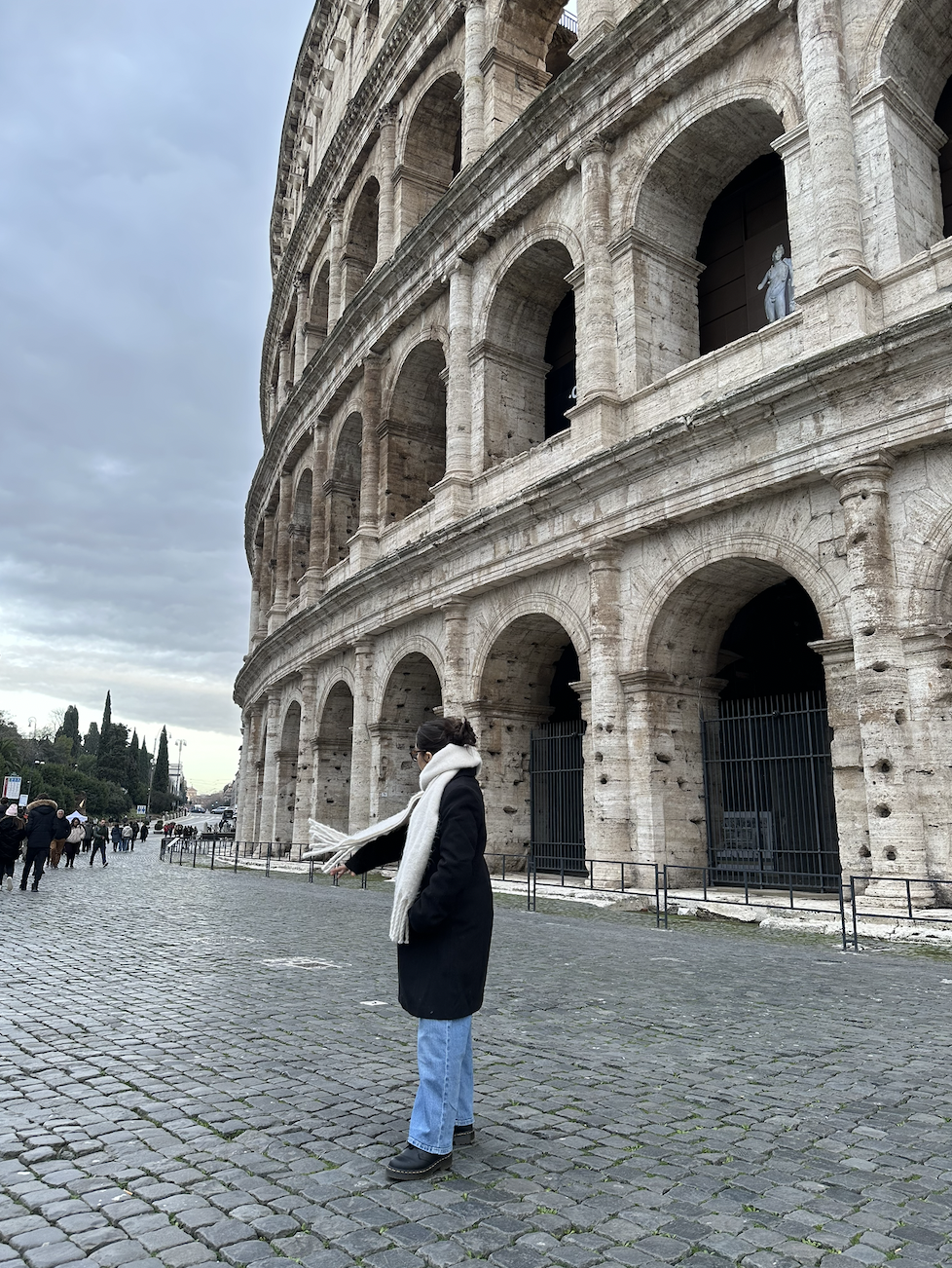
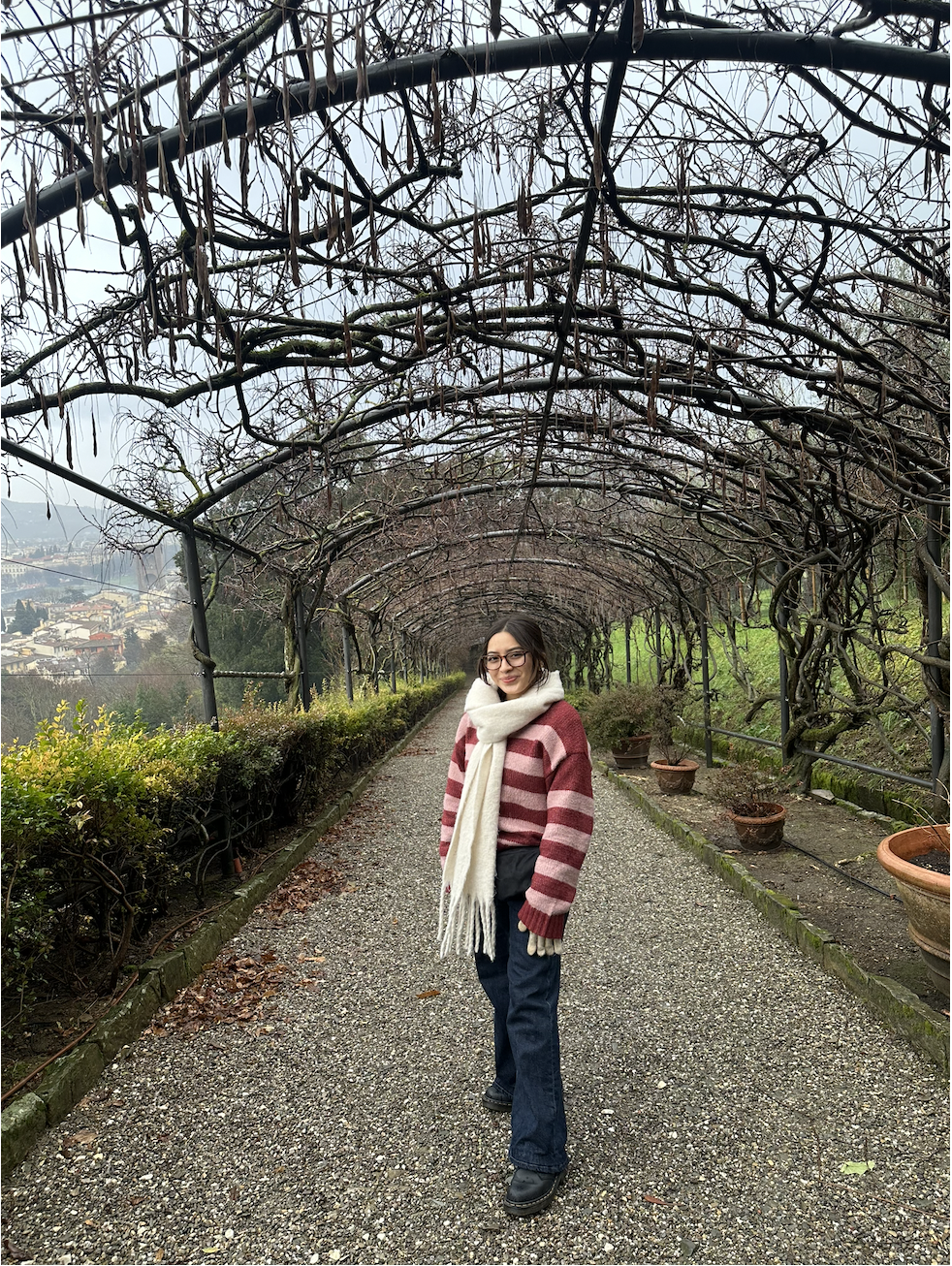
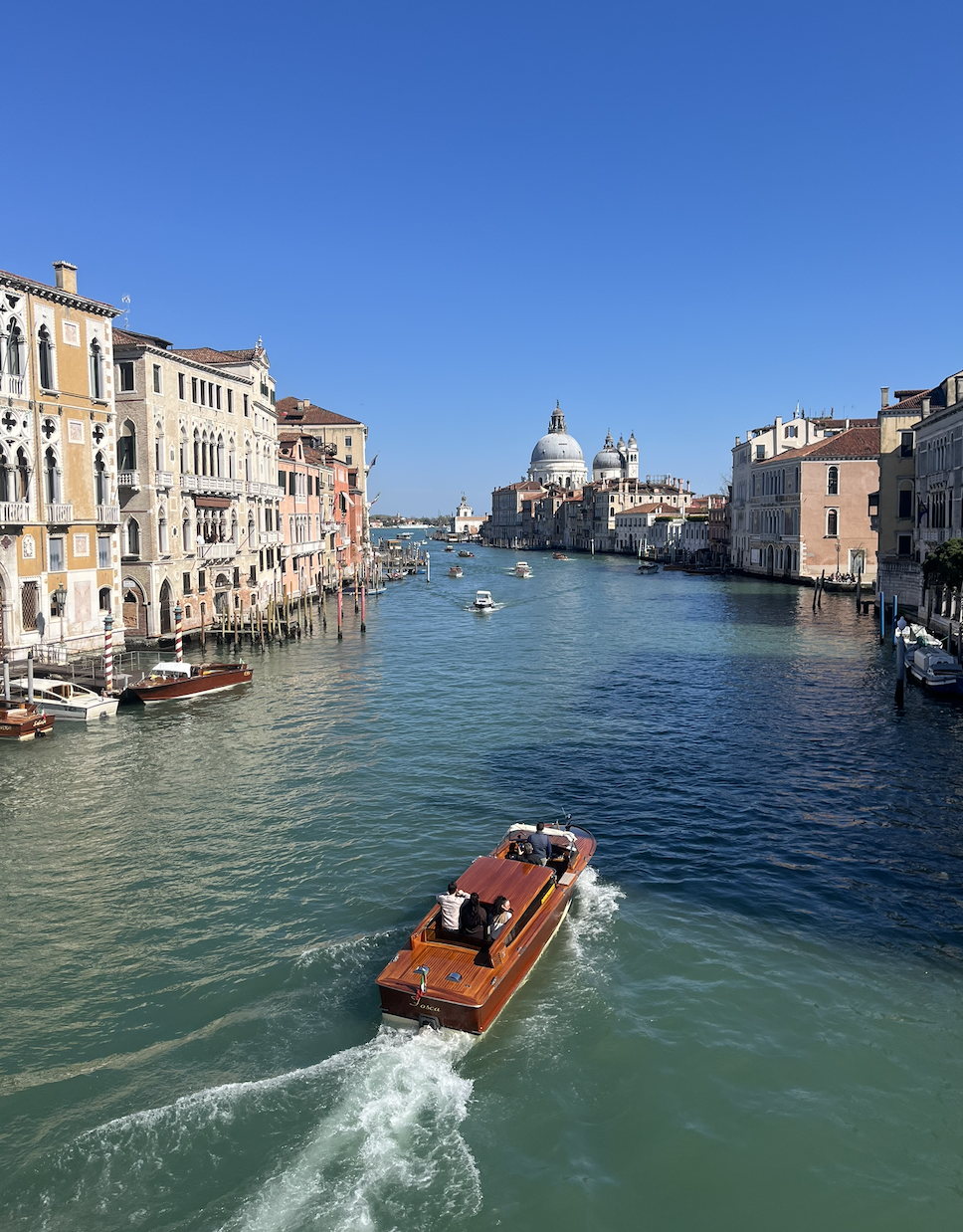
A: My greatest challenge was learning to navigate daily life independently in an unfamiliar environment, from figuring out the bus system to ordering food in a language I was still building confidence in. Early on, even simple errands felt intimidating, and that uncertainty extended to a long-standing fear of flying that initially made me hesitant to travel beyond Rome. I overcame this by leaning into repetition and practice rather than avoidance, taking the bus enough times that it became routine, asking locals and classmates for help when I needed it, and treating my mistakes as a normal part of learning rather than something to be embarrassed by. Eventually, I pushed past my fear of flying to travel to Venice, Florence, and Naples, which became some of the most rewarding parts of my semester. By the end, the same tasks that once felt overwhelming had become second nature, and I left with a stronger sense of independence and self-trust than I had going in.
Q: How did your coursework abroad compare to your courses at UC Merced?
A: My coursework in Rome was noticeably lighter than what I am used to at UC Merced, where I typically take a heavier course load. At first, this felt like an adjustment, but it ended up giving me space to actually absorb what I was learning rather than just moving quickly from one assignment to the next. Taking classes outside my usual Public Health focus also felt like a refreshing break, allowing me to explore new subjects without the pressure of staying entirely within my major. The teaching style itself was different as well, not because of a language barrier, since my courses were taught in English, but because of the distinct perspective Italian professors brought to the classroom. Lectures felt more discussion-based and reflective compared to the more structured, exam-heavy format I am used to at UC Merced, and assignments often asked me to connect what I was learning to the culture and city around me rather than relying solely on traditional testing. Overall, the experience gave me a new appreciation for different academic approaches and reminded me that learning does not always have to follow the same format I am used to back home.
Q: What did you gain from your study abroad experience?
A: Studying abroad gave me far more than academic knowledge. On a practical level, I gained real-world insight into how culture shapes nutrition and health, observing firsthand how Italy's food traditions and daily eating habits reflected the more intentional, community-centered approach to wellbeing I hope to bring into my future public health career. I also strengthened skills that don't always show up in a classroom, like navigating an unfamiliar transportation system, communicating in a language I was still learning, and adapting quickly when things didn't go as planned.
On a personal level, the growth went even deeper. I became more independent and confident in my ability to handle new, uncertain situations, and I learned to push past long-standing fears, including a fear of flying that once held me back from exploring more of the world. Perhaps most importantly, I learned to stop measuring my experience against everyone else's expectations and instead make choices based on what genuinely brought me joy. I came home with a clearer sense of who I am, a stronger belief in my own capabilities, and a renewed motivation to show others from backgrounds like mine that opportunities like this are within reach.
Q: What advice do you have for students considering study abroad?
A: My biggest piece of advice is to let go of the pressure to do everything. It is easy to feel like you have to visit every major city or check off a long list of "must-see" experiences just to feel like you made the most of your time abroad. In reality, some of the most meaningful moments come from smaller, less expected places and everyday routines, like a quiet bus ride or a day in a town you had never heard of before arriving. I would also encourage students to push through their fears rather than avoid them, whether that means speaking a language you are still learning, trying new foods, or traveling somewhere unfamiliar. The uncomfortable moments are usually the ones that teach you the most about yourself. Finally, do not be afraid to ask for help when you need it. Locals, classmates, and program staff are there to support you, and leaning on them when things feel overwhelming will only make the experience richer.
Q: What do you wish you learned about studying abroad before you left for your program?
A: I wish I had known beforehand that it is okay not to have everything figured out right away. Before I left, I assumed that struggling with simple things, like using public transportation or ordering food, meant I was not adjusting well, when in reality that discomfort is a completely normal part of the process and fades much faster than expected. I also wish I had understood earlier that the experience does not have to look a certain way to be meaningful. I spent more time than I needed to worrying about hitting every major city or "doing it right," when the smaller, quieter moments ended up mattering just as much, if not more. Knowing that ahead of time would have helped me settle into the experience with less pressure and more openness from the very beginning.
Q: Describe a typical day abroad.
A: A typical day for me started with waking up, getting ready, and making a simple breakfast before heading out to catch the bus to class. Between classes, I usually had a break, which I would spend either grabbing food nearby or eating something I had packed myself, before heading to my next class for the day. Once classes were finished, I would go home to drop off my laptop and books, then head back out, often taking the bus to another part of Rome like Prati or Trastevere. Evenings were usually spent exploring those neighborhoods with friends, whether that meant trying new restaurants, checking out the nightlife, shopping, or simply walking around and getting gelato. After spending the evening out, I would head home and get ready to do it all again the next day.
Q: If you could go anywhere in the world tomorrow, where would you go and why?
A: If I could go anywhere in the world tomorrow, I would choose Japan. After spending a semester exploring how food and culture intersect with health in Italy, I am drawn to the idea of experiencing that same connection in a completely different setting. Japan's food culture, deeply tied to balance, tradition, and community, fascinates me from a public health perspective, and I would love to see firsthand how those values show up in everyday life. Beyond that, my experience abroad gave me a genuine appetite for exploring new places and pushing myself outside my comfort zone, and Japan feels like a natural next step in that journey.