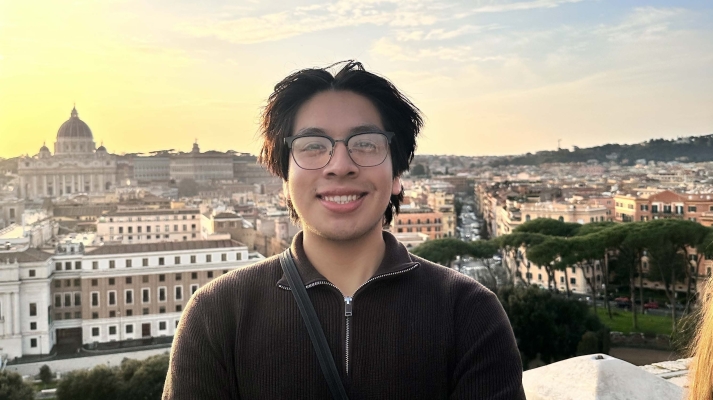
Q: Initially, what made you decide to study abroad? Why did you choose your programs?
A: Initially, I decided to study abroad because I wanted to expand my perspective on how a different society and culture can shape health, mental well-being, community, and everyday life. As a Public Health student, I was interested in understanding health and how culture, social connection, history, and the built environment all influence the way people live and care for themselves.
I chose my program in Rome because it connected deeply with my interests in culture and society. I was drawn to the opportunity to study culture and society in a city where all of those things are part of everyday life. I also wanted to challenge myself to become more culturally competent, more adaptable, and more confident navigating a new environment.
Q: What was the highlight of your study abroad experience?
A: The highlight of my study abroad experience was the daily walk through the city to get to my learning center. Over time, I memorized the path, recognized familiar streets, noticed local shops, and slowly began to understand the rhythm of the city. Walking through Rome each day allowed me to see how the city lived, moved, and breathed.
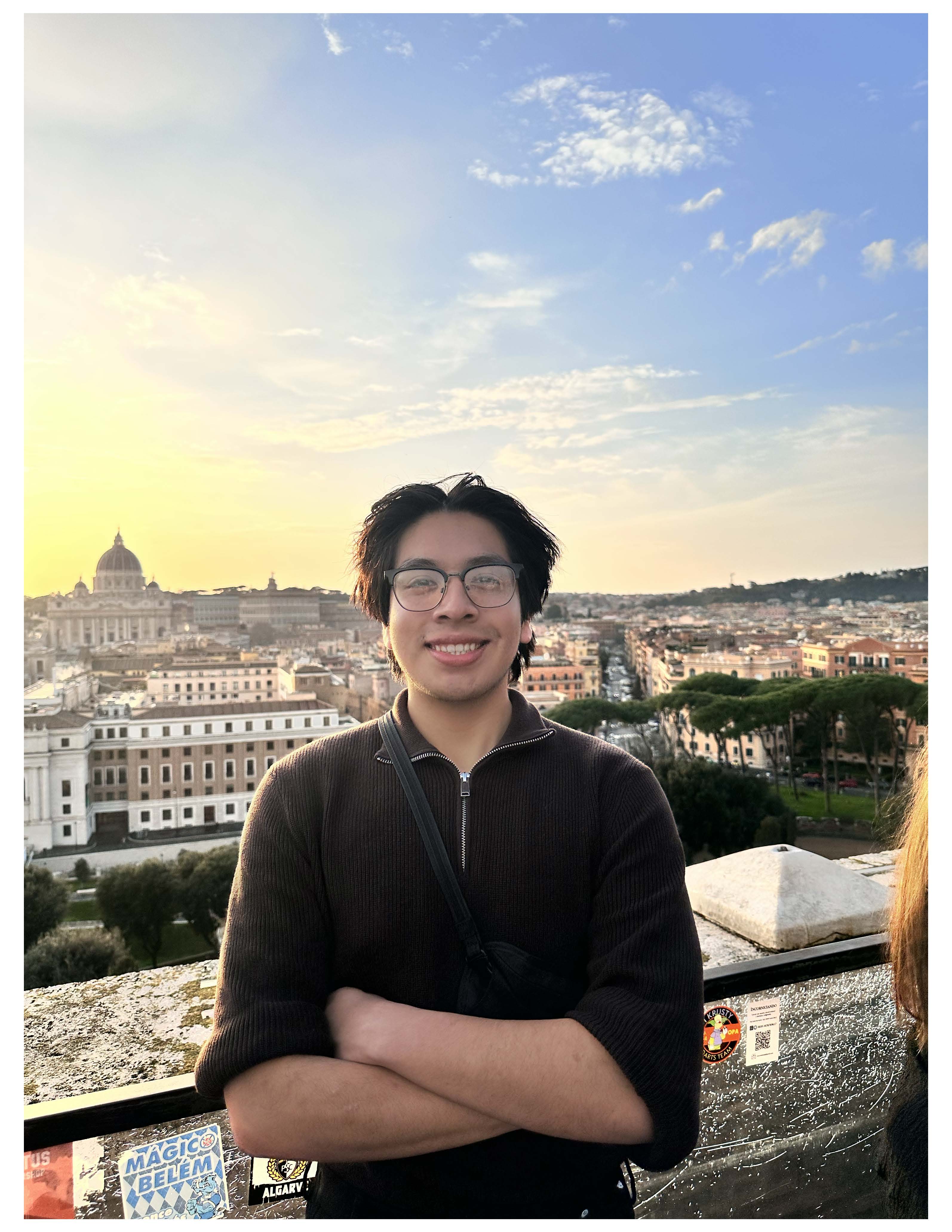
One of the most beautiful parts of that routine was crossing near the Tiber River and looking across at the buildings, churches, and everyday scenes around me. Those walks made me feel like I was not just visiting Rome, but becoming part of it. I loved picking up the language, recognizing familiar locals and places, and feeling more connected to the city with each passing day.
Q: What was your greatest challenge abroad and how did you overcome it?
A: My greatest challenge abroad appeared within the first few weeks. I had to learn how to be patient and adaptable with the language, cultural norms, and daily expectations of a new country. Even though I had been practicing Italian before arriving, once I got to Rome, the spoken language felt much faster than I expected. At first, it was difficult to keep up, and I sometimes felt nervous when ordering food, asking questions, or trying to communicate respectfully.
I overcame this challenge by continuing to practice, paying close attention to how locals interacted, and allowing myself to make mistakes without becoming discouraged. After a couple of weeks, I became more comfortable holding small conversations and following respectful customs. Over time, I felt more integrated into the community and this challenge taught me that growth often comes from discomfort, and that confidence builds slowly through patience.
Q: How did your coursework abroad compare to your courses at UC Merced?
A: My coursework abroad felt very different from my courses at UC Merced. One of the biggest differences was the quarter system. Since the courses moved quickly, the information felt more condensed and fast-paced. This kept me engaged because each class covered meaningful topics in a short amount of time, but it also made me realize that I sometimes would have liked more time to sit with the material, reflect on it, and explore it more deeply.
The lecture styles also felt different because so much of the learning connected directly to the city around us. The culture, history, architecture, food, and daily life of the city became part of the learning experience. It helped me understand that learning can happen through lots of observation, conversation, movement, and immersion.
Q: What did you gain from your study abroad experience?
A: I gained a deeper sense of independence, cultural awareness, and personal confidence from studying abroad. Living in Rome taught me how to adapt to unfamiliar situations, communicate across language barriers, and become more comfortable outside of my usual environment. I learned how to respect different customs and approach challenges with more patience.
I also gained a stronger understanding of how culture shapes wellbeing. As someone interested in public health and mental health, I became more aware of how social connection, community spaces, and cultural traditions influence people’s daily lives. Studying abroad helped me see health in a more human and empathetic way.
Personally, I grew a lot. I became more open-minded, more reflective, and more appreciative of both the world outside of my home and the community I come from.
Q: What advice do you have for students considering study abroad?
A: My advice for students considering study abroad is to be excited and to go with an open heart and an open mind. It is totally normal to feel nervous before leaving, especially if it is your first time living in another country, but discomfort is exactly part of what makes the experience so meaningful. It’s so important to be willing to learn, make mistakes, ask questions, and adapt.
I would also encourage students to not only focus on the major landmarks or big trips. Some of the most meaningful memories can come from everyday routines, like walking to class, ordering at a local café, learning a new phrase, or recognizing the same streets each day. Try to be present in the small moments because those are often the ones that stay with you the most.
Finally, prepare as much as you can, but do not expect everything to go perfectly. Studying abroad teaches you flexibility and the more patient and curious you are, the more you will grow from the experience!
Q: What do you wish you learned about studying abroad before you left for your program?
A: I wish I had known that it is normal to feel overwhelmed at first, especially when adjusting to a new language, new routines, and different cultural expectations.
I also would have liked to know more practical details about daily life, such as how locals communicate, how to navigate small cultural customs, and how different the pace of life might feel. Those details may seem small, but they can make a big difference in helping students feel more prepared and confident.
Q: Describe a typical day abroad.
A: A typical day for me abroad usually began with getting ready for class and walking through the city to my learning center or a class excursion. That walk became one of the most important parts of my routine and many times I would love to take the bus to see the city. I would pass familiar streets, buildings, shops, and views of Rome that slowly started to feel more personal to me. I remember crossing the Tiber river each day. Many times I would hear Italian conversations around me, notice the pace of the people, or go looking into random shops.
After class, I would love to explore the city, stop for food, study, or spend time with friends. Even ordinary activities, like grocery shopping or ordering something in Italian, felt like part of the beautiful learning experience.
In the evenings, I would reflect on the day and enjoy the city in a slower way. The beauty was in slowly becoming familiar with a place that once felt completely new.
Q: If you could go anywhere in the world tomorrow, where would you go and why?
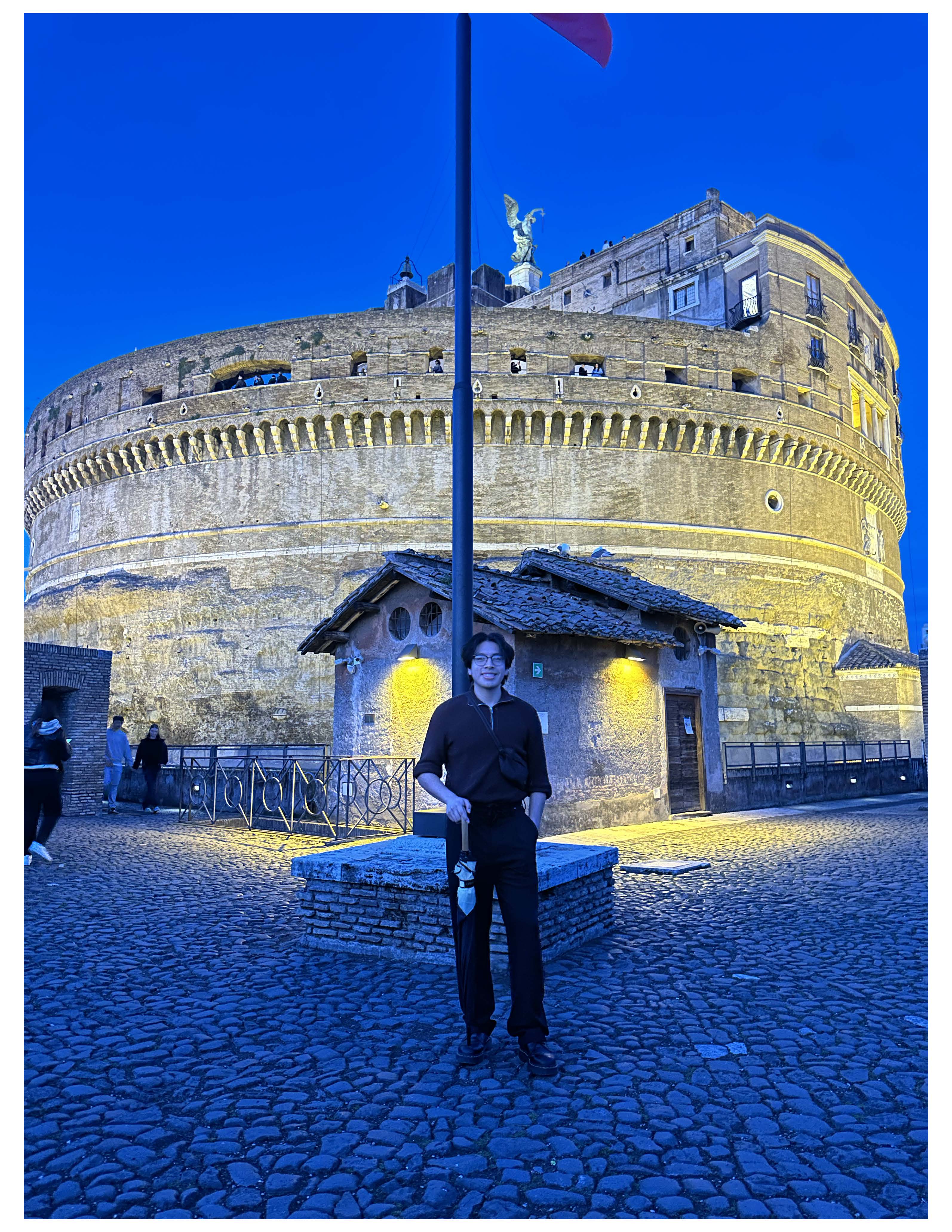
A: If I could go anywhere in the world tomorrow, I would return to Rome. Rome became more than just the place where I studied abroad. It became a place where I truly grew, learned, and discovered a new version of myself. I would want to return to revisit the everyday places that became meaningful to me. The cobblestone streets I walked, the views near the Tiber River, the local spots I recognized, and the feeling of being surrounded by the city.
I would go back because Rome taught me that a city can shape the way you see yourself and the world. It reminded me to appreciate the beauty in ordinary moments. Returning to Rome would feel like reconnecting with a place that helped me become more independent, adaptable, and open-minded.